Manns, John Wesley

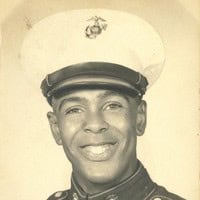 John Wesley “Buddy” Manns, age 84, entered into eternal rest on November 16, 2025, surrounded by the family who loved him and who never left his side. He was born on July 21, 1941, in the mountains of Southwest Virginia, a son of the late Elizabeth Manns Casey, and a grandson raised and shaped by the unconditional love of his beloved grandparents, the late James Garfield Manns, Sr, and Hattie Austin Manns. Their home, their values, and their faith created the foundation upon which his long and remarkable life was built.
John grew up in the close-knit community of New River, surrounded by the Manns and Casey families, who were landowners, homeowners, entrepreneurs, and respected members of the community. At a time in the 1940s and 1950s when the world beyond their holler was marked by segregation and hostility toward Black Americans, New River offered him something rare: insulation, dignity, and safety. Growing up on “Manns Drive” he was raised among people who owned their land, built their homes, and ran their own businesses, and that foundation of stability allowed him to see himself not as lesser, but as capable, worthy, and free. His grandfather and uncles played a profound role in shaping that sense of security, surrounding him with a level of protection that many Black children of his generation did not enjoy. It was one of the greatest gifts the Manns could give him: the freedom to explore the world without the constant burden of fear, carrying instead confidence, belonging, and the quiet certainty that he came from strong people.
As the eldest of the Casey children, John was the big brother in every sense of the word. He was a protector, a quiet example, and often the steady bridge between generations for the Casey and Manns families in New River. His younger siblings looked up to him with deep admiration, and that bond, formed in childhood, only grew stronger with time. In his later years, his sister Pattra became his tireless caretaker and fiercest advocate, walking with him through hospital corridors, doctor’s appointments, and difficult days with a love that was unwavering. Her devotion to him was a living testament to the power of family, and to the deep roots of the Manns and Casey clans.
The Christiansburg Institute
John was raised during the era of “separate but equal,” when opportunity for Black children was often constrained by law and custom. Yet he was blessed to attend one of the most exceptional Black high schools in the nation, the Christiansburg Institute. Founded after the Civil War and later guided by the strong influence of Booker T. Washington and the Tuskegee Institute, Christiansburg Institute was no ordinary school. Its teachers, many trained at Tuskegee, brought world class rigor to the hills of Southwest Virginia. Its curriculum was demanding, its standards uncompromising, its graduates extraordinary. In an era when Plessy v Ferguson defined the legal landscape and Brown v Board of Education was only beginning to reshape it, Christiansburg Institute stood as proof that excellence could thrive even where equality did not.
By the time John graduated in 1960, the same year Ruby Bridges bravely walked into a newly integrated school, Christiansburg Institute was producing scholars, artisans, thinkers, and changemakers whose education rivaled any in the country. Students and parents in Southwest Virginia were reluctant to relinquish the school during integration precisely because it had become a world-renowned institution, a place where dreams were nurtured, discipline was taught, and dignity was instilled.
John was one of those exceptional students. He graduated prepared for college and planned to attend North Carolina A &T University. But America in the early 1960s was turbulent, and financial hardship often upended even the most promising paths. Like many young Black men of his generation, John chose another route to serve his country and shape his future. He enlisted in the United States Marine Corps.
A Marine’s Marine
From the moment he stepped onto the training grounds, John distinguished himself. He possessed the discipline of his grandparents, the sharp mind forged at Christiansburg Institute, and a quiet form of courage that did not announce itself, it simply acted. Over the course of more than eight years of active duty, followed by years in the Marine Corps Reserve, he rose to become a highly trained infantry soldier with elite tactical assignments not often spoken of outside the ranks of those who served.
John served not one, but two combat tours in Vietnam. During his second tour, John served as the third in command of his platoon, serving as the senior sergeant responsible for logistics, readiness, and ensuring that every Marine in his platoon had the equipment, ammunition, and support needed to survive and continue the mission. That responsibility was enormous, because it is reported that John served in the legendary 1st Battalion, 9th Marines, an infantry battalion that came to be known as “The Walking Dead” because of its extraordinarily high casualty rate in Vietnam and its long record of sustained combat. That unit spent years on the front lines in some of the most dangerous terrain in the war, including the area known as “Leatherneck Square,” where the wind was said not to blow, but to suck, because so many rounds were flying. The Marines of this Battalion carried more than rifles, they carried the weight of history, duty, and sacrifice for their country. The battalion fought through some of the most harrowing missions of the Vietnam War, and John carried out his duties with steadiness, precision, and uncommon resolve.
Like many Black Marines of that era, John often found himself on the sharpest edge of danger. Black soldiers in Vietnam were disproportionately placed on the front lines, asked to fight for a country that was still struggling to grant them full citizenship at home. Many came back with wounds that did not show on their skin. The burdens of post-traumatic stress, depression, and moral injury were rarely named and almost never treated in the way they should have been. John bore those invisible scars like so many of his brothers in arms, yet he pushed through, managed his struggles as best he could, and refused to let the hardest chapters of his life define all of it.
During combat, he sustained serious injuries and spent more than three months hospitalized while recovering. As he healed, he was offered reenlistment, an opportunity that would have meant returning to Vietnam for a third tour. But John believed God had spared him too many times to ignore the message. His mission as an active-duty Marine had been fulfilled. He accepted an Honorable Discharge, closing one chapter of service and preparing for the next.
Though he rarely discussed the details, those closest to John understood that he was part of a group of Marines entrusted with some of the hardest missions of the Vietnam War. He served with distinction and valor, earning numerous commendations, including the Vietnam Cross of Gallantry w/ Silver Star, the Vietnam Service Medal, the Vietnam Campaign Medal with device, the National Defense Service Medal, the Good Conduct Medal, rifle marksmanship badges, and other honors reflecting skill, bravery, and sacrifice. Although John received numerous commendations, the truth is that he was entitled to even more. Like many Marines who fought in Vietnam during the 1960s, particularly Black Marines, some of his honors were never formally awarded or properly recorded. Among the ribbons and citations, he should have received were the Combat Action Ribbon, the Marine Security Guard Ribbon, the Marine Expeditionary Medal, the Presidential Unit Citation, and the Meritorious Unit Citation. He also qualified for the Purple Heart for the injuries that sent him to the hospital for more than three months. Whether by clerical oversight or the imperfect recordkeeping of that era, these honors never followed him home but will be awarded to him posthumously. But John did not measure his worth by what adorned his uniform. He never needed ribbons to tell him who he was. He understood his duty, he fulfilled his mission, and he carried his service with a quiet pride that no medal could ever capture.
John also learned Farsi as part of his specialized military training and served at the United States Embassy in Tehran during periods of heightened geopolitical tension. He saw parts of the world that most Americans only read about, and he carried the weight of those experiences with a quiet stoicism that was both humbling and profound.
Service at the White House
After his distinguished Marine Corps career, John continued his service to the nation as a member of the United States Secret Service Uniformed Division with White House duty. He began on the elite Motorcycle Patrol Unit, one of the most visible and demanding protective assignments. He took immense pride in this role, mastering the precision, instincts, and split-second judgment it required.
He was later promoted to a Uniformed Secret Service Officer, serving for two decades with distinction. His duties included securing the White House grounds, participating in classified missions, and completing numerous protective rotations at Camp David. He accompanied Presidents Ronald Reagan and George Herbert Walker Bush, as well as First Ladies Nancy Reagan and Barbara Bush, on high- level meetings and official retreats. These assignments were not ceremonial but critical to national security, and John carried them with unwavering professionalism. Although he was a lifelong Democrat, he admired the grace, discipline, and humanity he witnessed in those he protected. His loyalty to duty transcended politics. Service, to him, was sacred. He approached his Secret Service role the same way he approached everything in life, with seriousness, precision, patriotism, and pride.
A Complex Journey, A Loving Legacy
Like many veterans who returned home carrying the unseen scars of war, John walked a long road through life. The things he had seen and done in combat, the pressures of service, and the silence that surrounded mental health for Black men of his generation all left their mark. The weight he carried sometimes showed up in his relationships and in his parenting, and those closest to him, especially his children, shouldered some of the bumps and bruises that come when a loving father is still learning how to live with what he has survived. It is part of the truth of his story and part of the strength of theirs.
Yet one of the most beautiful truths about John’s life is that he kept evolving. He did not stay frozen in the hardest version of himself. He grew, he healed, he learned, and he loved. Over time, he worked to repair what war, hardship, and his own human frailty had strained. He did the quiet work of apologizing through actions and deeds. His children did the brave work of forgiveness and continued relationship. Together, they built a more honest, tender, and resilient love.
In his later years, he became a devoted grandfather, present in ways that were redemptive, joyful, and restorative. He came to milestones, celebrations, and ordinary days that mattered. He loved deeply. He laughed fully. He embraced the blessings of age with softness and gratitude, becoming the father, grandfather, and father-in-law he had always wanted to be. He was especially proud of his namesake, his grandson Wesley Tesfaye Robinson, with whom he shared a special bond, a quiet understanding that spanned generations and carried both his name and his hope forward. As a father-in-law he showed the very best version of himself. He embraced the father/son-in-law relationship with humility and respect, and he stepped fully into this role as an elder, guiding with quiet wisdom and offering his hands in service. One example is when he forced Jimmy (nobody’s handyman) to build a deck on their home instead of outsourcing it. They built that deck plank by plank, hour after hour, allowing them to form a bond grounded in work, laughter, and mutual admiration. Jimmy did not experience the struggles that shaped his earlier years; by the time their relationship formed, he had become a man of grace, steadiness, and love.
John was funny, charming, and wise. He was stoic, yet warm. He was proud, yet humble. He never wanted pity, never sought applause, and never complained about the burdens he carried. He lived his life with dignity, integrity, and quiet courage.
Reclaimed Family Ties
One of the most meaningful chapters of John’s life occurred nearly two decades ago, when he reunited with his siblings from his late biological father Goldie Stuart’s family. He embraced them with the openness of someone who had not simply met relatives but found missing pieces of himself. He loved them as if he had known them all his life, and they added richness, joy, belonging and completeness to his later years.
Preceded in Death, Survived in Love
John was preceded in death by his beloved mother, Elizabeth Manns Casey, his stepfather, Gladwynn H Casey, his brother, Randy C Casey, his nieces, Lisa Burley and Mary Elizabeth Grubb, his beloved grandparents, James Garfield Manns, Sr and Hattie Austin Manns, his former wife and mother of his children, Carolyn Coan Manns, as well as a host of close cousins with whom he shared his earliest years.
He is survived by his children, Jonathan B Manns (Victor Talley), and Monica R Manns (Jimmy F. Robinson, Jr.), his grandchildren, Madison Rahel Robinson, Wesley Tesfaye Robinson, and Frehiwot Bentz Robinson, his siblings, Rickie Casey (Maxine), Pattra Hampton, Sharon Burley, Beverly Grubb, and Laura Terry (Bobby), and his siblings from his father’s side, Freddie “Skeet” Stuart (Violet), Kenneth Stuart (Gerri) Lewis Stuart (Monica), Brenda Harris (Jerry), and Irma Simpson (Bill), and his former wife and lifelong friend, Rosie Manns. He also leaves behind a host of nieces, nephews, aunts, uncles, cousins, and friends who will carry his memory with love.
A Life of Service, A Life of Meaning
John Wesley “Buddy” Manns lived a life that spanned generations of American history, from the segregated hollers of Southwest Virginia to the front lines of Vietnam to the gates of the White House. In each place, he carried the lessons of his upbringing, the discipline of a Marine, and the heart of a man who knew hardship but chose perseverance. His life crossed eras, continents, and battlefields, both the ones the world could see and the ones no one ever witnessed. He served his country with valor, protected presidents with unwavering discipline, and stood tall in every uniform he ever wore. He was a grandson shaped by elders, a Marine shaped by battle and history, a protector defined by duty, a father and grandfather redeemed by love, and in the final measure a man transformed by the love he both received and, in time, learned to give.
His life teaches us that heroes do not always seek recognition and heroism is often quiet. It is the daily act of rising after being knocked down, of choosing dignity when the world offers none, of giving more than life has given you. Sometimes heroes simply endure, overcome, and give all they can to the world, one chapter at a time.
John’s journey reminds us that greatness is not measured only in medals or missions, but in evolution. In the courage to grow, to heal, to love more deeply with time. Heroes are not always the loudest in the room; often, they are the ones who endure what others could not, and still find a way to stand, laugh, and give. It is possible to walk through fire and come out not unscarred, but unbroken. John showed us that strength is not only found on the battlefield, but in the slow, deliberate work of loving family, making amends, and showing up when it matters.
He left this world as he lived in it, surrounded by love, anchored by family, and wrapped in the quiet authority of a life that meant something. May his memory be a blessing, may the echo of his courage and conviction call each of us to live with the same quiet courage, and may his story inspire all who knew him and all who hear it.
A funeral service will be held at 11 a.m. Monday, December 1, 2025, at First Missionary Baptist Church, 7318 Manns Drive, New River, VA. The family will receive friends one hour prior to the service. Live Streaming will be available from the Hamlar-Curtis website. Click “View Live Streaming Here” at the top of the screen, then select “Facebook Live Stream – Roanoke”. Interment will be in the Southwest Virginia Veterans Cemetery, 5550 Bagging Plant Road, Dublin, VA. In lieu of flowers, the Manns family respectfully requests donations in the Memory of John Wesley Manns be made to: Christiansburg Institute Alumni Association (CIAA) https://www.zeffy.com/en-US/donation-form/carrying-their-light-forward. Condolences may be sent to www.hamlar-curtis.com or info@hamlar-curtis.com.